Hi, I'm Samantha C
I am a Product Strategist. I solve incredibly complex problems. I also co-design solutions with organisations in a way that puts community first. My training is in Service Design (or Customer Journey Management), Business Architecture, and Business Transformation. I bring 11 years of understanding systems, organisation and people.Within Ericsson, my recent stint, I am expert in communication and simplification - this includes empowering executives to draw focus about business objectives whilst providing a framework for engineers to negotiate budgets.
Designing CX journey for Volvo AI Diagnostics Agent
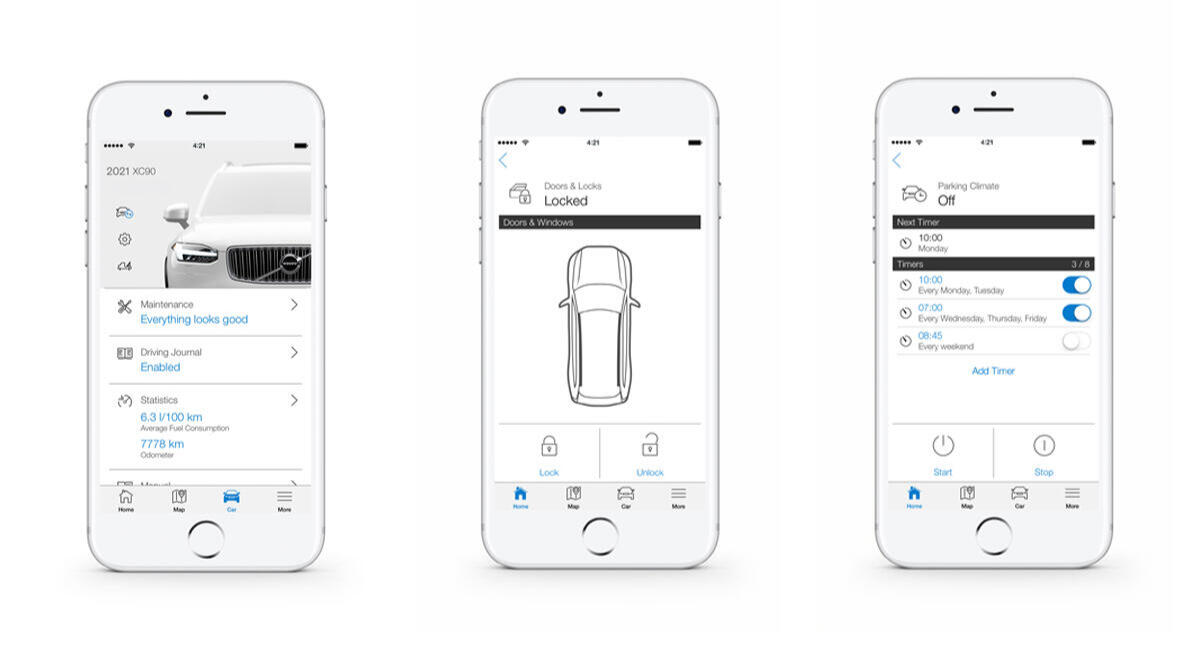
Volvo was developing an AI/ML service - a car care diagnostics AI agent - the first of its kind in the industry. In doing so, we enhance the customer experience and integrate AI in a way that encouraged customer autonomy.
Product Strategy for CR Tool
Streamlined Change Request processes and tools (a highly complex system within Ericsson) across the globe
Business Architecture for Network Portfolio & Operations
Translating Strategy to Operations: This initiative connects executive view to complex operations. It developed a framework for understanding value-creation e.g. clear customer outcomes instead of solely focusing on past PnL and efficiency performance.
Designing Business Transformation Course
I designed and conducted an upskilling course. Topics include learning how to frame up customer needs and developing solutions for them. I also improved the course experience over time.
Designing CX Journey for Volvo AI Diagnostics Agent
The Opportunity
In 2022, Volvo R&D wanted to develop an AI/ML service - a car care diagnostics AI agent - the first of its kind in the industry. They were looking to automate selected parts of the process, whilst facilitate more thorough preparation from the customer to ensure better repair outcomes.This project aims to build customer loyalty and lifetime value - as an effective partner in providing the best and thoughtful automobile experience for customers.
Solution
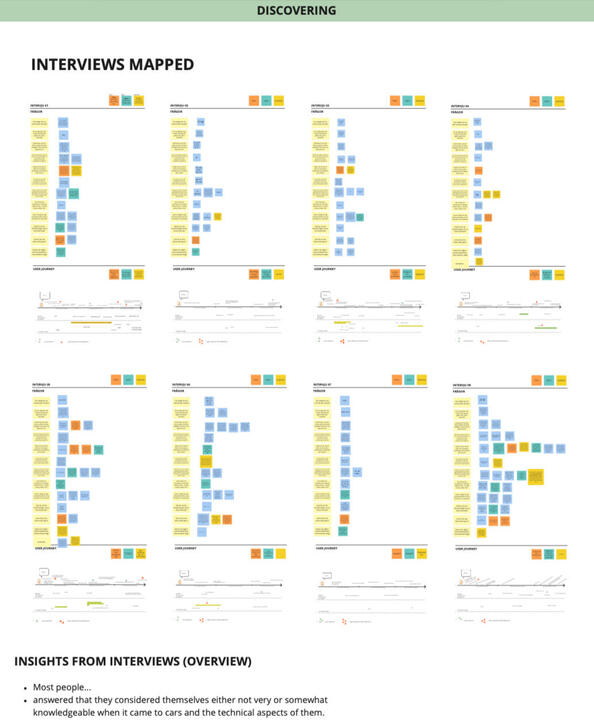
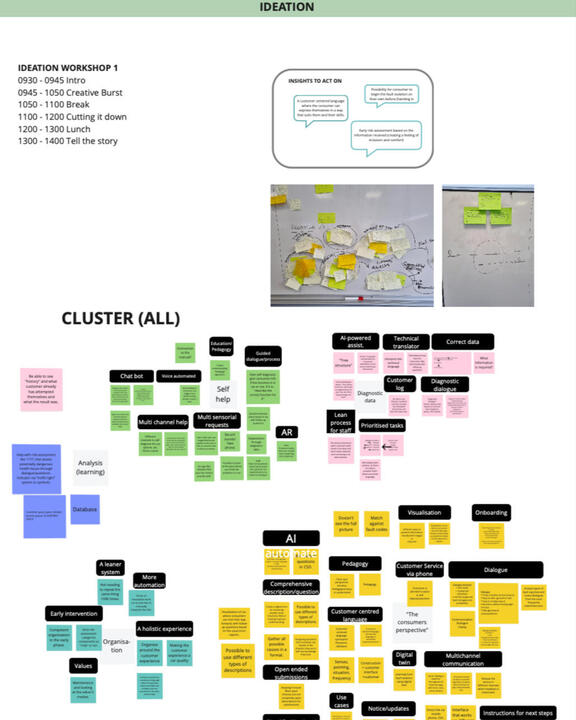
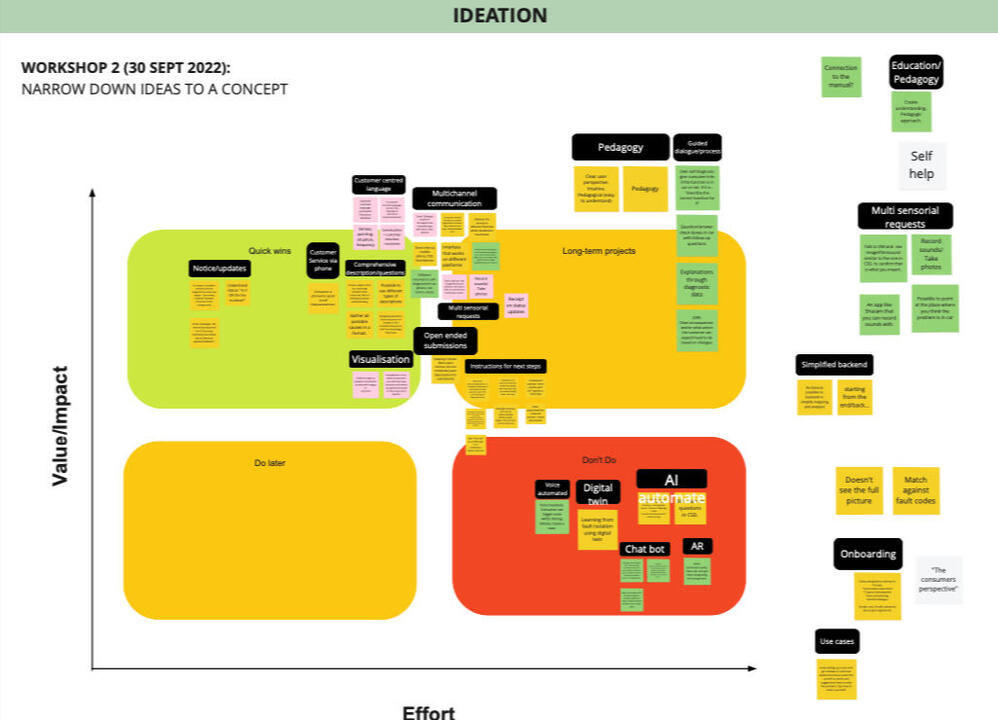
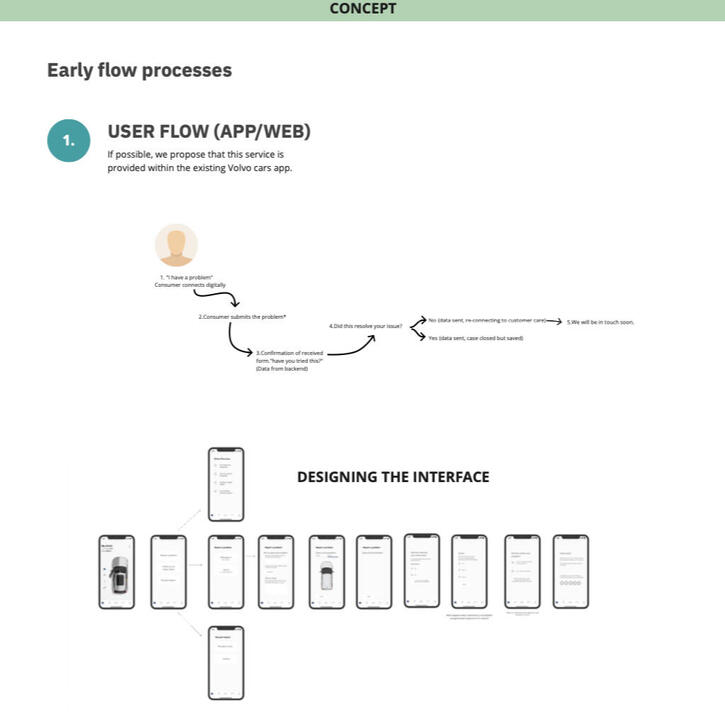
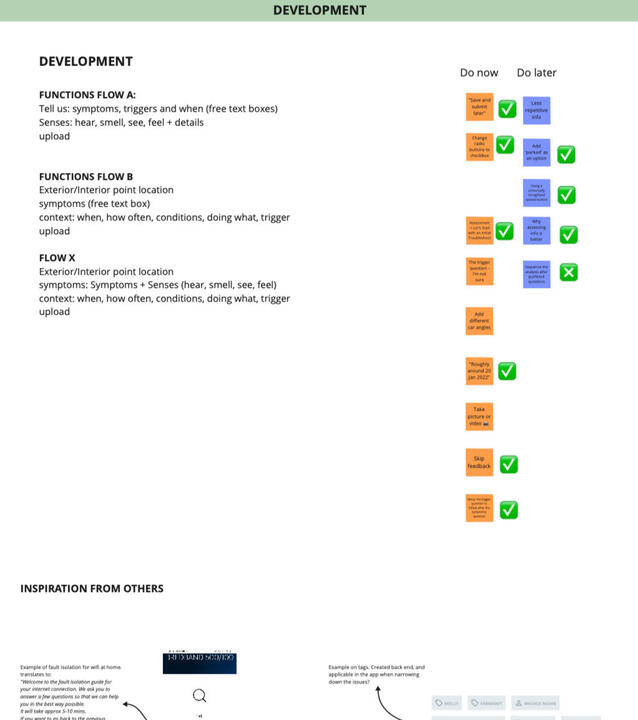
Volvo predicted that a diagnostics AI agent can be instrumental in improving customer loyalty in the long run, as well as improve efficiencies leveraging automated engineering. We started by analysing the Volvo customer repair process thematically, as well as gathering insights from Volvo experts in different parts of the process.The process belows shows how user and customer data informs the ideation (e.g. customer journey mapping, service blueprint, user flow mapping, concept/feature development), testing (e.g. Usability testing and A/B testing), and prioritisation of front-end and back-end features. Through a series of tests with a diverse range of customers e.g. disabled, neurodivergent, middle-aged, elderly and millennial, we gained groundbreaking quantitative and qualitative insights.Not only did Volvo saved 6M SEK by reducing the number of features planned to be developed, they focused on perfecting and harnessing features customers truly valued.For more information to see how the service has developed thus far, visit: https://easyvolvoaid.com.Most of the research and testing done during this time has significantly contributed to the current website and flow.
Product Strategy for CR Management
The Opportunity
Change Requests processes and tools are highly complex. Challenges often include regional differences in laws and ways of working, syncing outdated tools with new ones, discrepancies in commercial planning and operational execution.Ericsson needed to find a way to set up a centralised hub to meaningfully store data as an asset. The objective? To better cater to existing customers, reduce revenue leakage due to data lost in translation, as well as predict new needs.
Summary
Before:• Fragmented CR intake
• No governance
• No prioritization
• 6+ legacy tools / Excel files e.g. Global Chronos, SAP, CRM toolsAfter:
• Unified workflow + governance
• Portfolio-aligned prioritisation
• Automated scoring and business case generation
• New common data environment
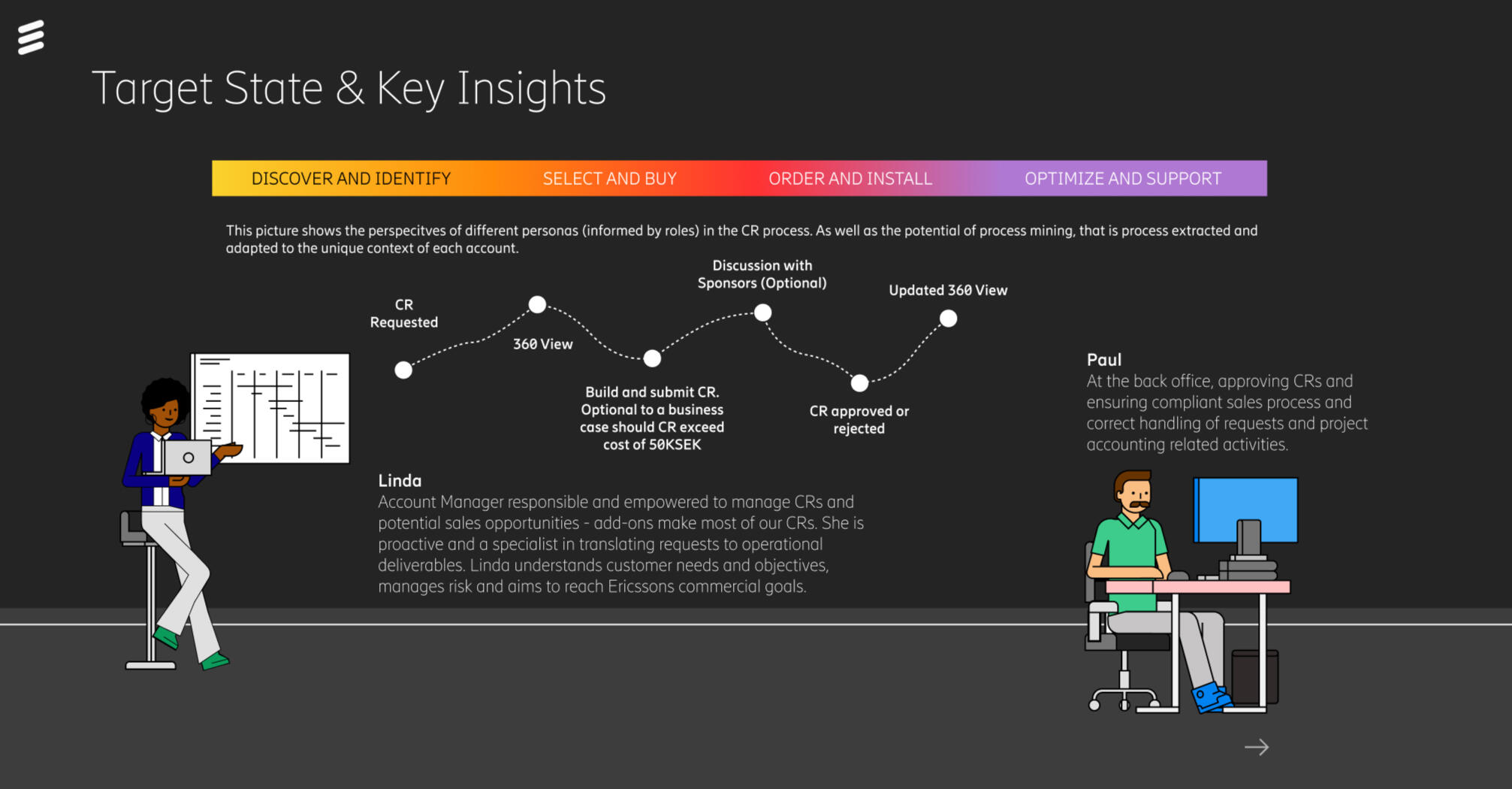
The Solution
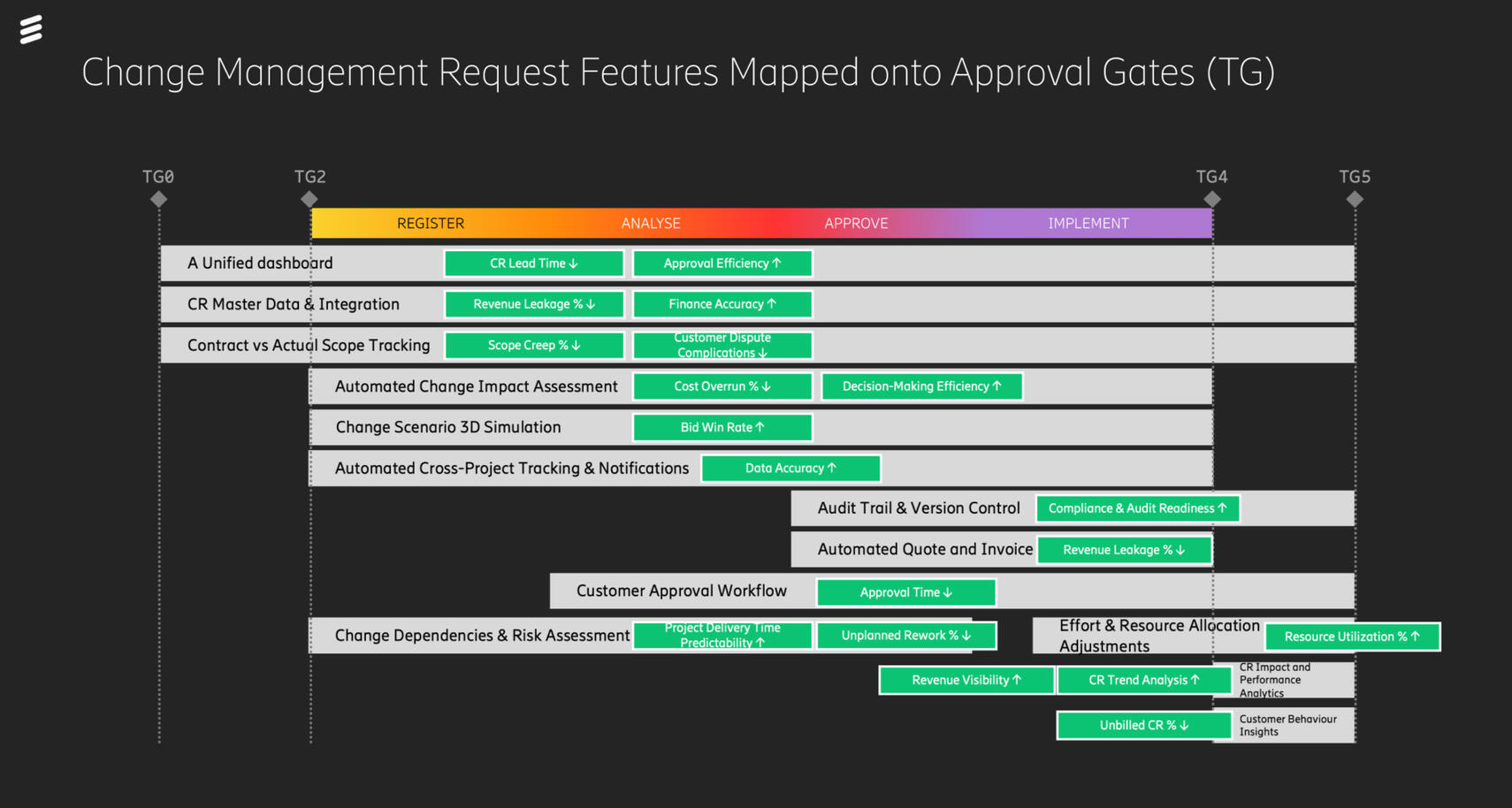
As Product Strategist, I led the transformation of a fragmented, Excel-based change-request process into a unified, data-driven capability that enabled Ericsson’s AI-powered post-sales operations across Networks & Services. The discovery phase revealed several opportunity and challenge areas that hindered scale and strategic alignment:• Messy or divergently formatted change requests
• Lack of prioritisation and conflicting stakeholder priorities
• Divergent regional workflows
• Limited data availability from legacy tools
• Bloated backlog filled with unprioritised escalation CRsTo bring clarity and alignment, I defined a structured end-to-end framework:
• Standardise how change requests are evaluated
• Build a governance model
• Produce clearer business cases
• Connect CRs to product strategy and backlog decisions
• Drive portfolio-level visibility
Data Collection → Synthesis & Thematic Analysis → Business Case → Consolidation → Agreed Prioritisation → Roadmap → Delivery Enablement / Handover
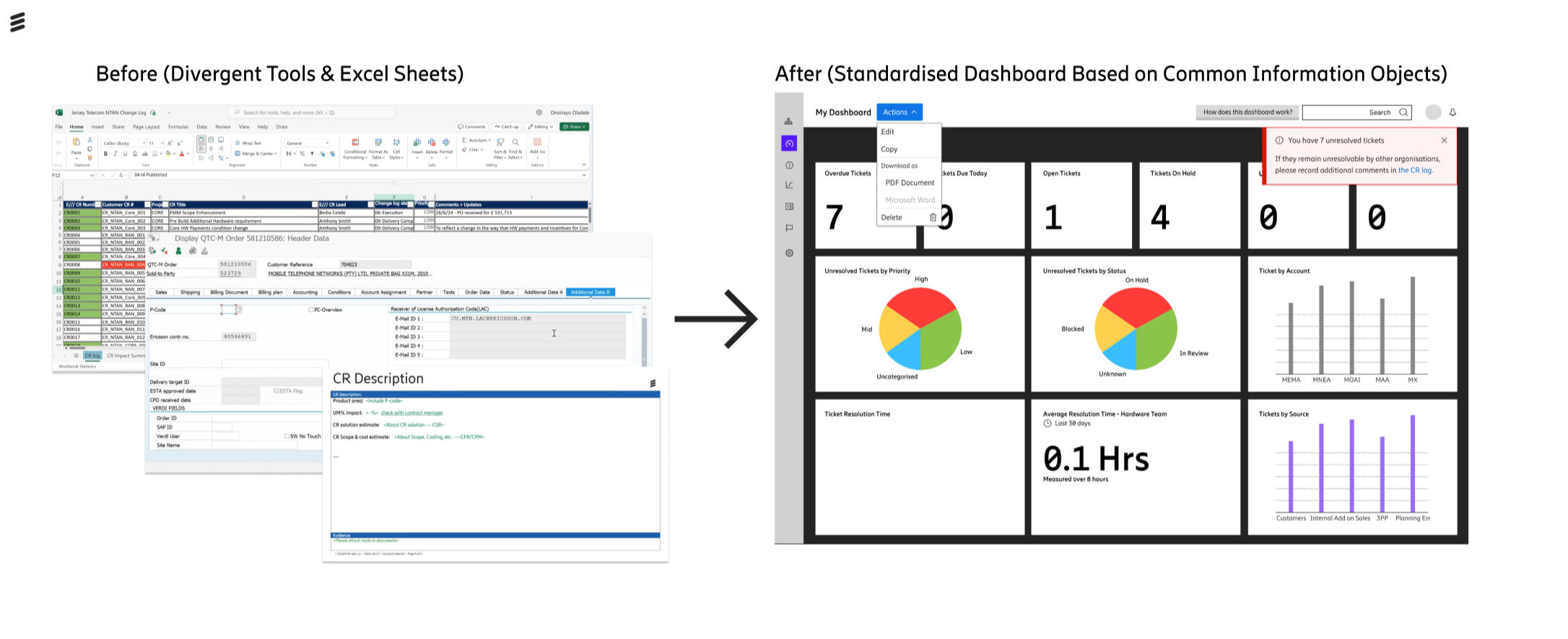
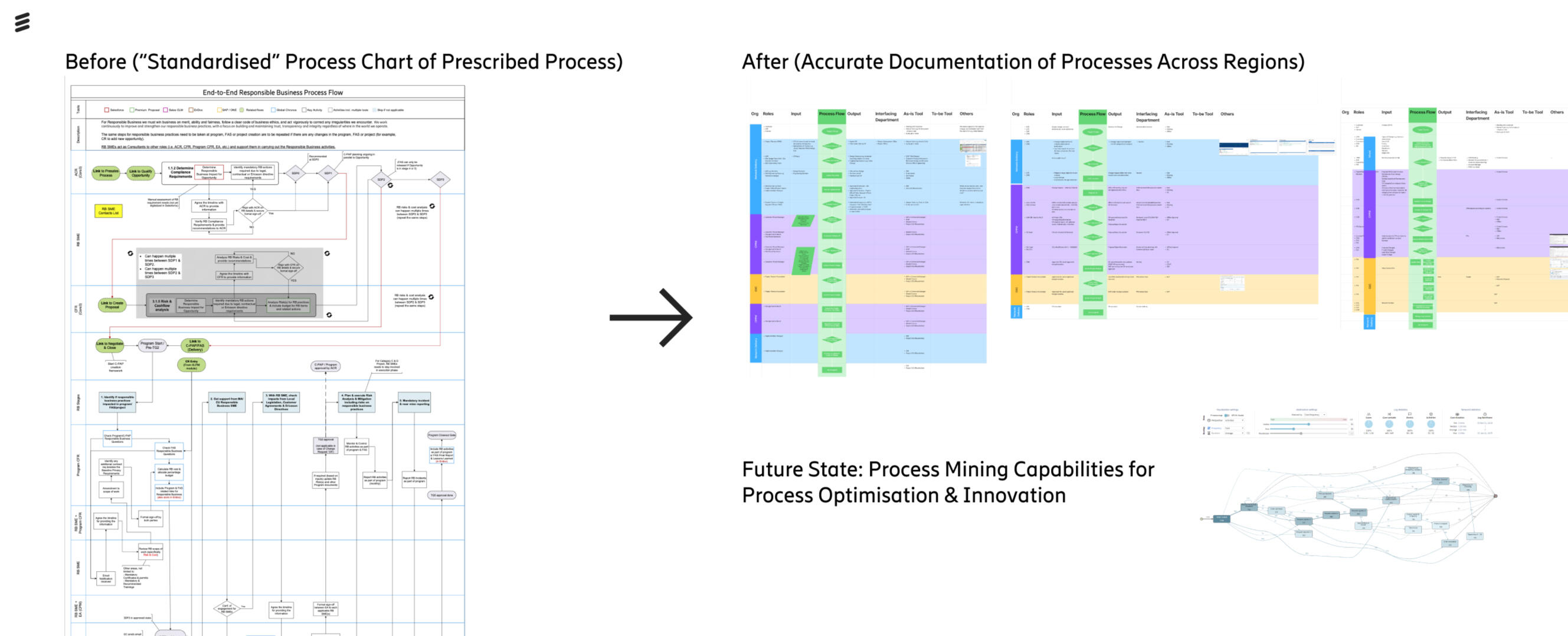
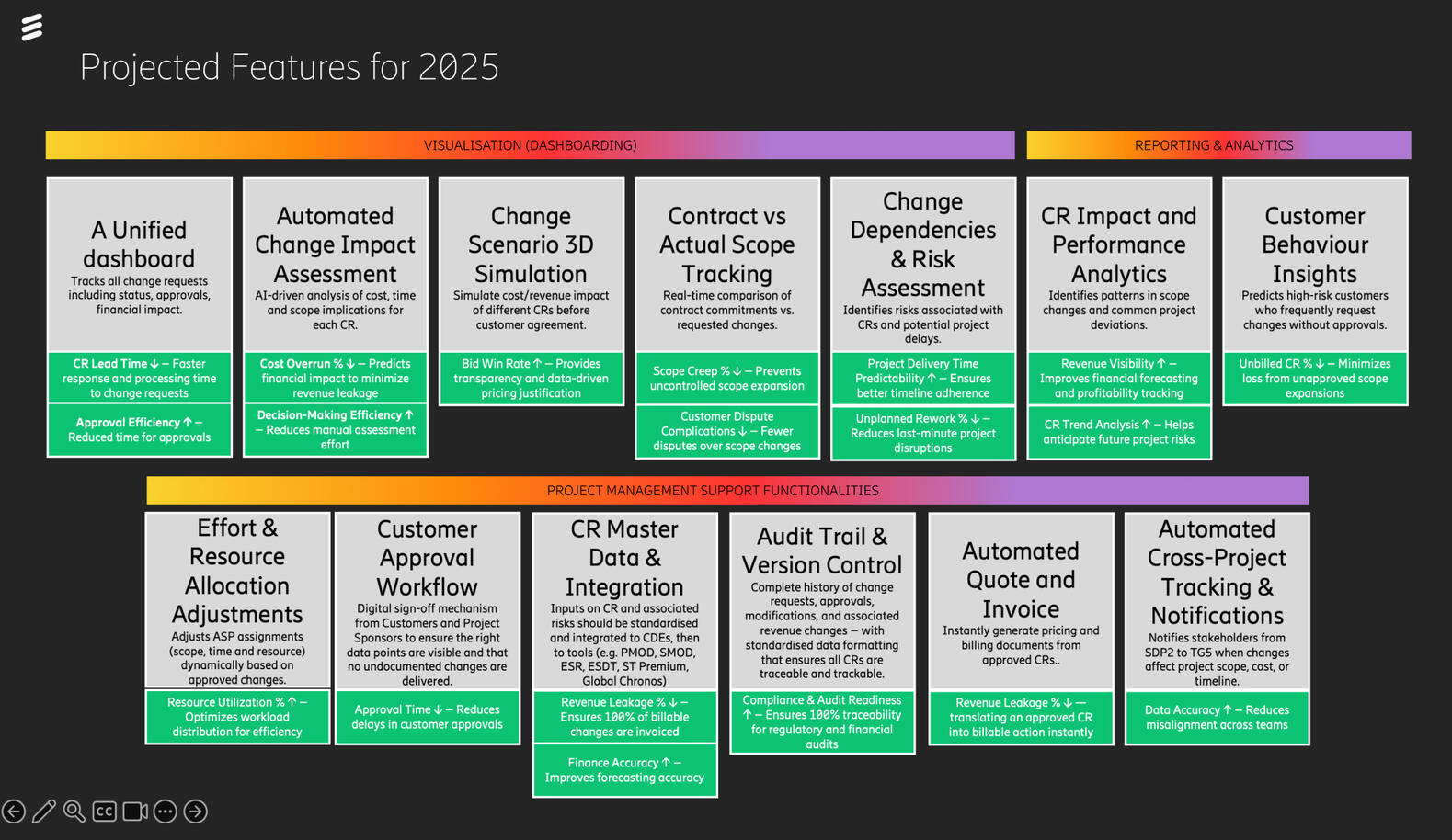
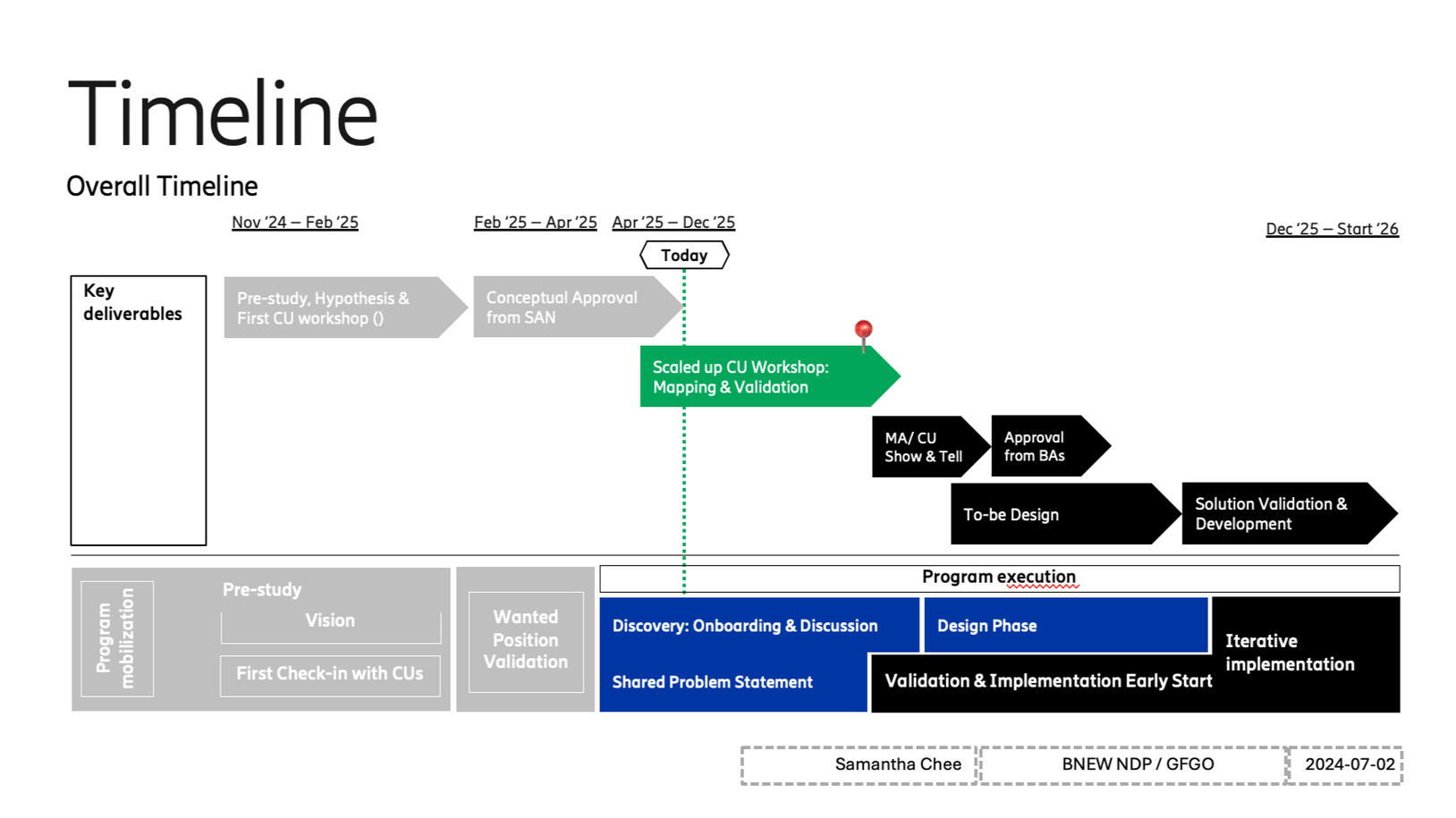
Within this structure, I standardised how requests were evaluated, introduced governance mechanisms (including a steering committee and L0–L3 process maps), produced clear and consistent business cases, and connected every change request to product strategy and backlog decisions. This resulted in portfolio-level visibility and a repeatable model for strategic decision-making.Using market signals, process insights, and cross-regional analysis, I designed new operating models that delivered 30–60% cost savings and clear automation ROI - this was measured over a pilot account. I proposed a prioritised set of features, produced strategy decks (to pitch to executive teams) and interface concepts, and established a structured intake-to-roadmap pipeline aligned with Ericsson’s enterprise goals.To ensure adoption at scale, I facilitated cross-functional workshops with 100+ stakeholders, aligning Operations, Business Units, Contractual teams, and IT on governance, requirements, and the future-state operating model. I also drove change management over several accounts from multiple legacy platforms into a new common data environment, enabling consistent data flows, scalable automation, and a modernised product ecosystem consumable by both newly designed tools and the existing architecture.
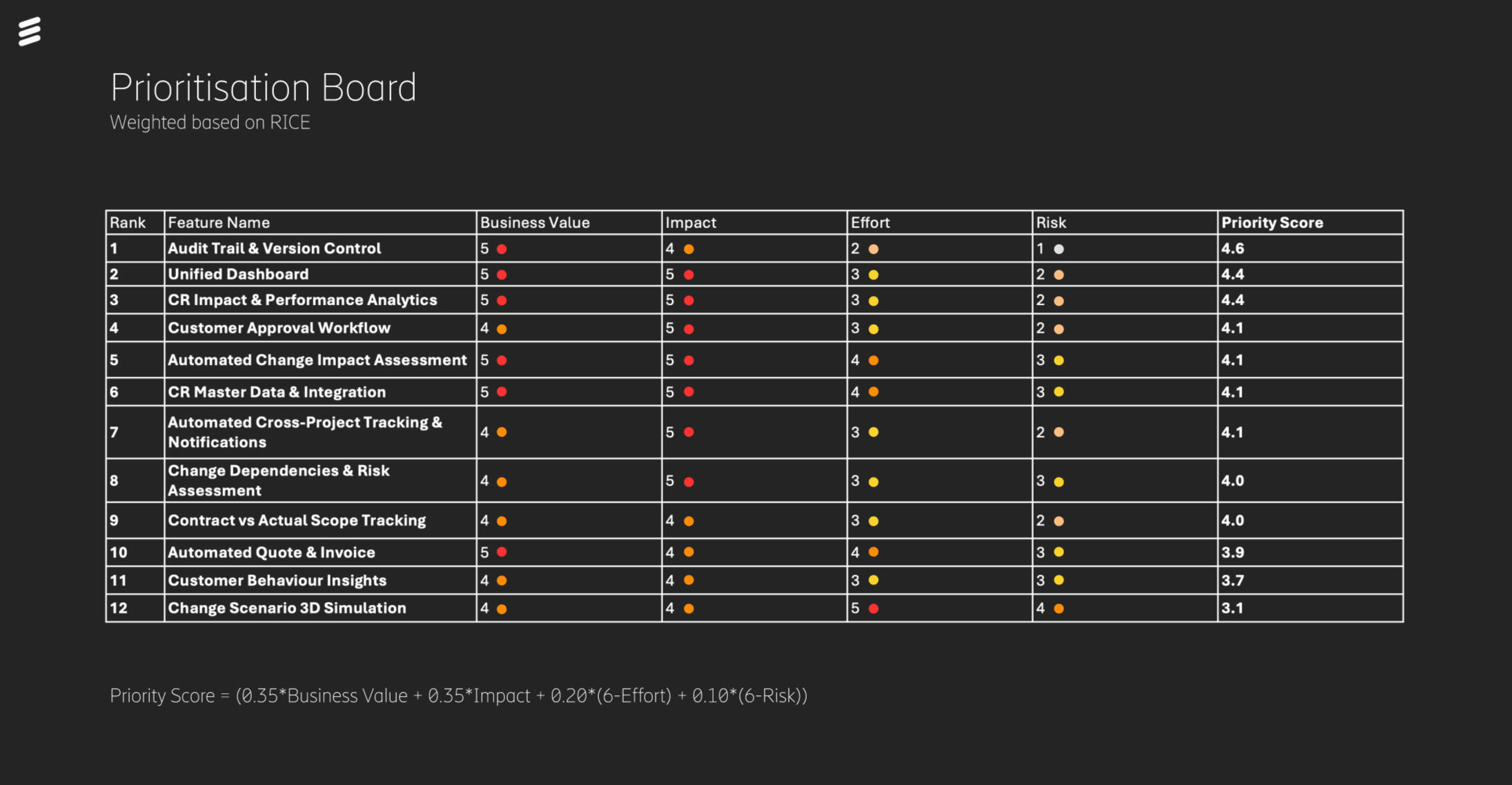
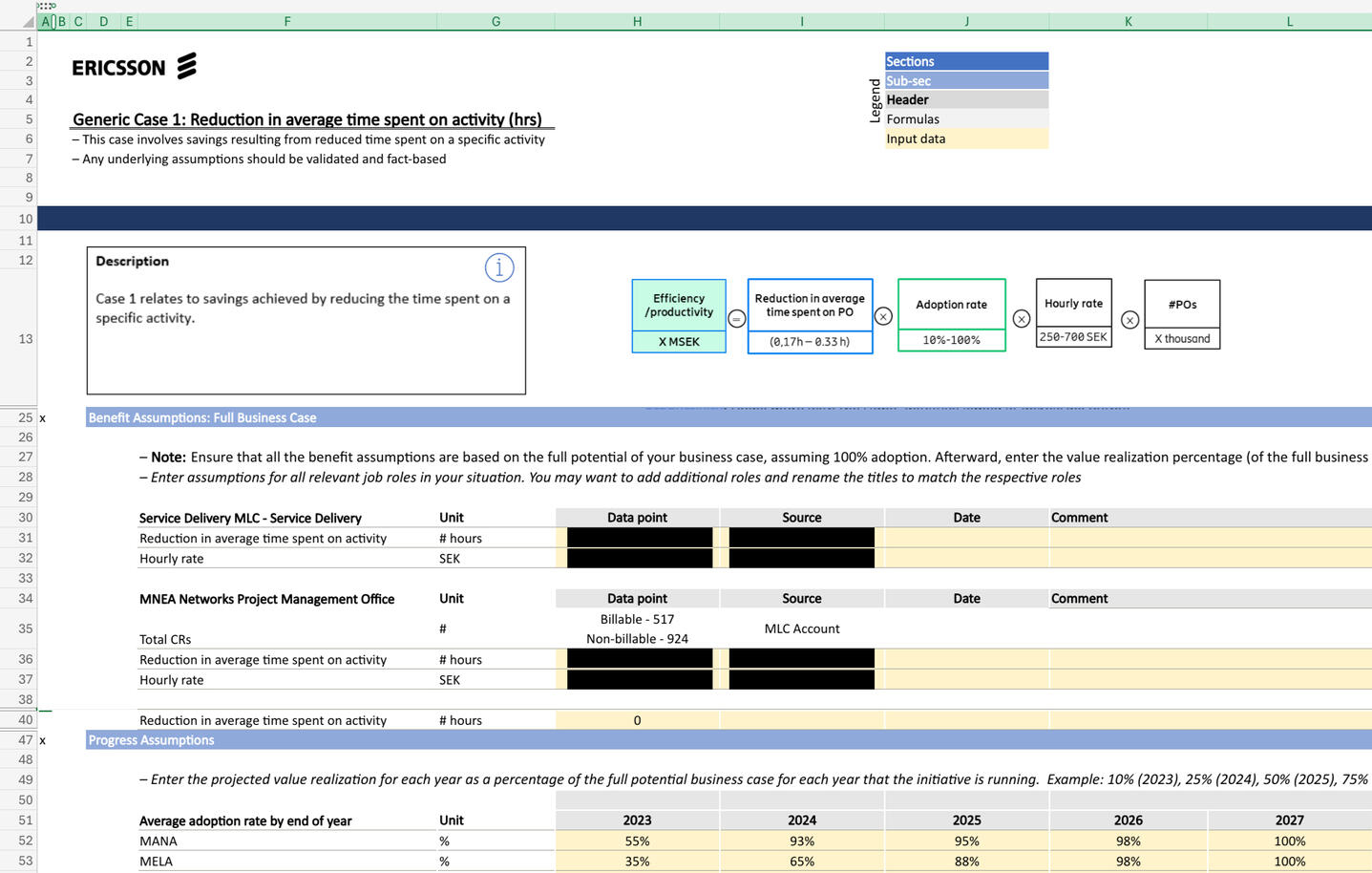
Numbers have been blocked out due to NDA.
Designing Business Transformation Course
The Opportunity
Ericsson, being a company filled with highly-skilled technical workers, had lower proficiency in the customer dimension. This L&D course fulfils this request of framing up customer needs and connecting them to revenue and business outcomes.
*Course curriculum includes:
• Topic 1: Understanding the Customer Dimension
• Why customer-centricity matters in a technical organization
• Common gaps between technical excellence and customer value
• Topic 2: Customer Needs & Pain Points
• Identifying explicit vs. implicit customer needs
• Translating technical solutions into customer value
• Topic 3: Linking Customer Value to Business Outcomes
• How customer satisfaction drives revenue
• Mapping customer needs to business and financial metrics
• Topic 4: From Insight to Impact
• Communicating customer value to stakeholders
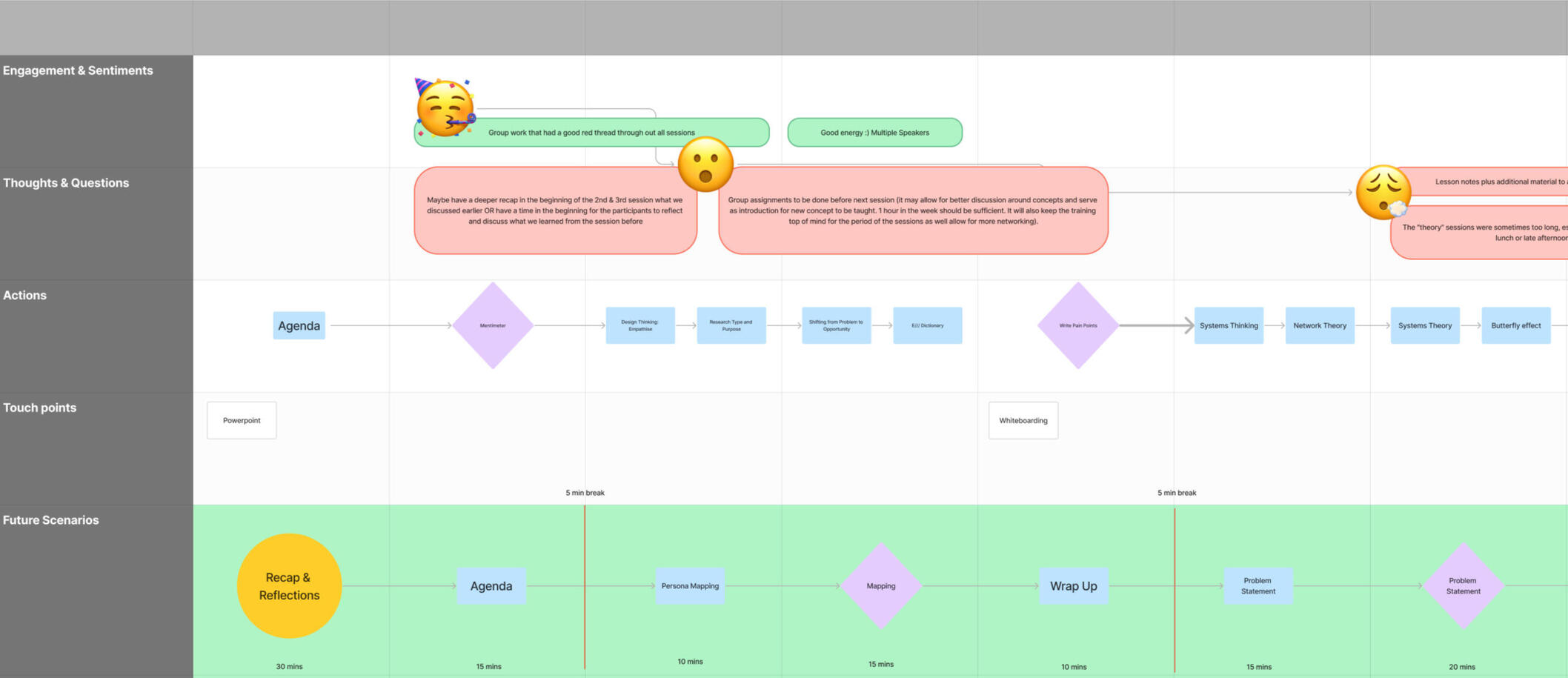
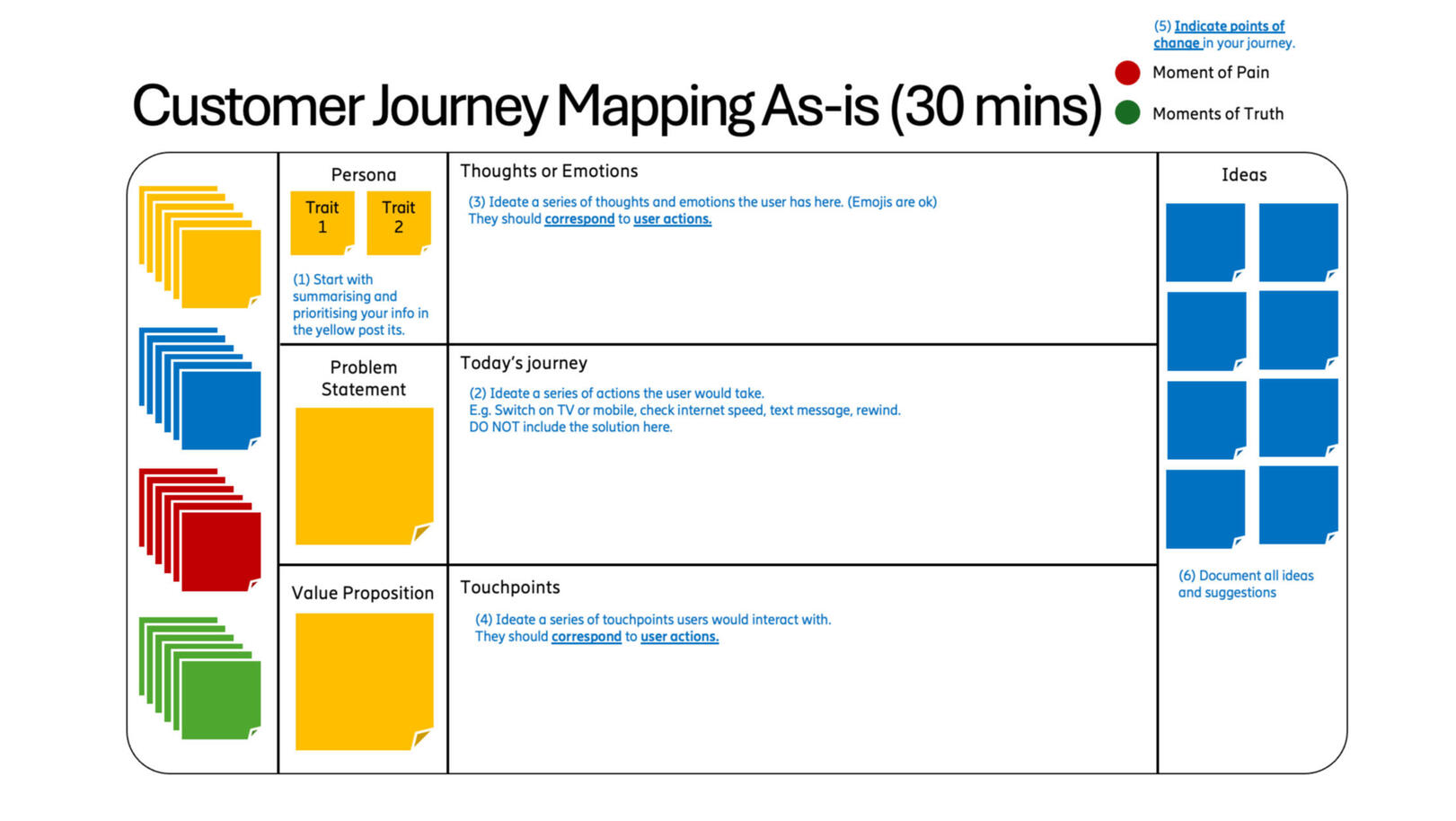
• Aligning technical decisions with customer and revenue goalsHaving designed, planned and coordinated 2 cohorts of about 40 participants, a product strategy (via design thinking, agile and transformation) course in Ericsson witnessed 40~60% increase in learning satisfaction and promoter score, enabling business transformation and agile adoption across the organisation.My role involves leading, planning, designing and conducting the sessions. I was appointed team leader for this workgroup.
Business Architecture for network portfolio & operations
The Opportunity
Networks as a business area within Ericsson faced the following challenges:
• Difficulty for capability leads to articulate value, negotiate investment, or defend budget - most strategic discussions leaned towards becoming a planning forum that centred around reporting instead of value creation.
• Budgeting decisions therefore becomes a black box with arbitrary outcomes for engineers. Vice versa for management teams when it came to process-to-business outcome discussions.
• Cross-functional teams described at different abstraction levels (L0–L4) with no shared semantics. Delivery outcomes articulated at L3 or L4 detail but no L0–L1 narrative for senior executives.
• Network concepts defined inconsistently across markets.
• Teams had little grasp for the customer dimension due to overwhelming focus on operational and technical delivery.
Summary
To initiate a strategic discussion focused on value-creation, this project aimed to envision the business for 2030 as a North Star. The secondary objective is to create a clear business architecture that bridges portfolio-level strategy and operational execution. This will facilitate a common view and vocabulary for teams to not only collaborate but negotiate with management teams to pitch for bigger budgets for strategic development.
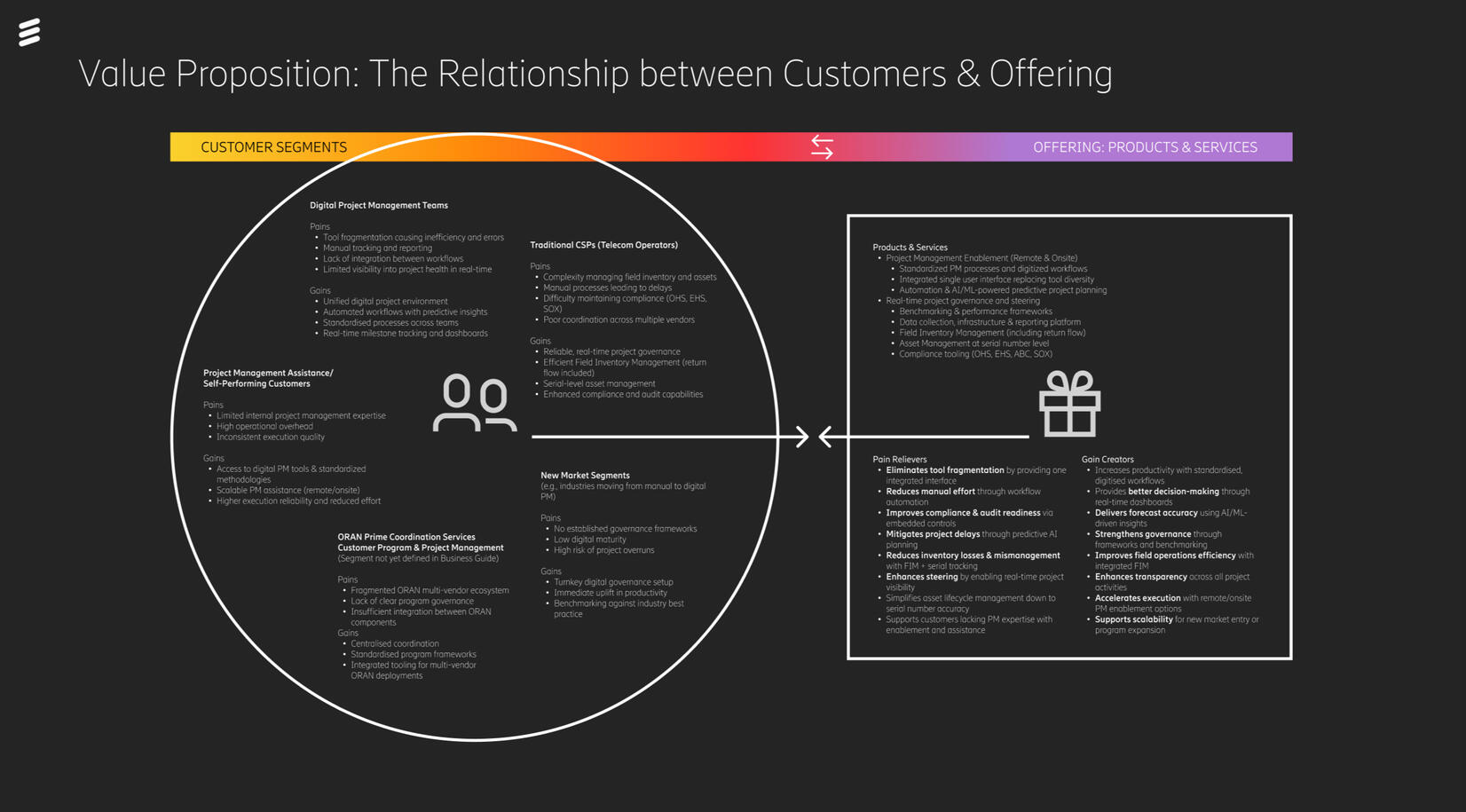
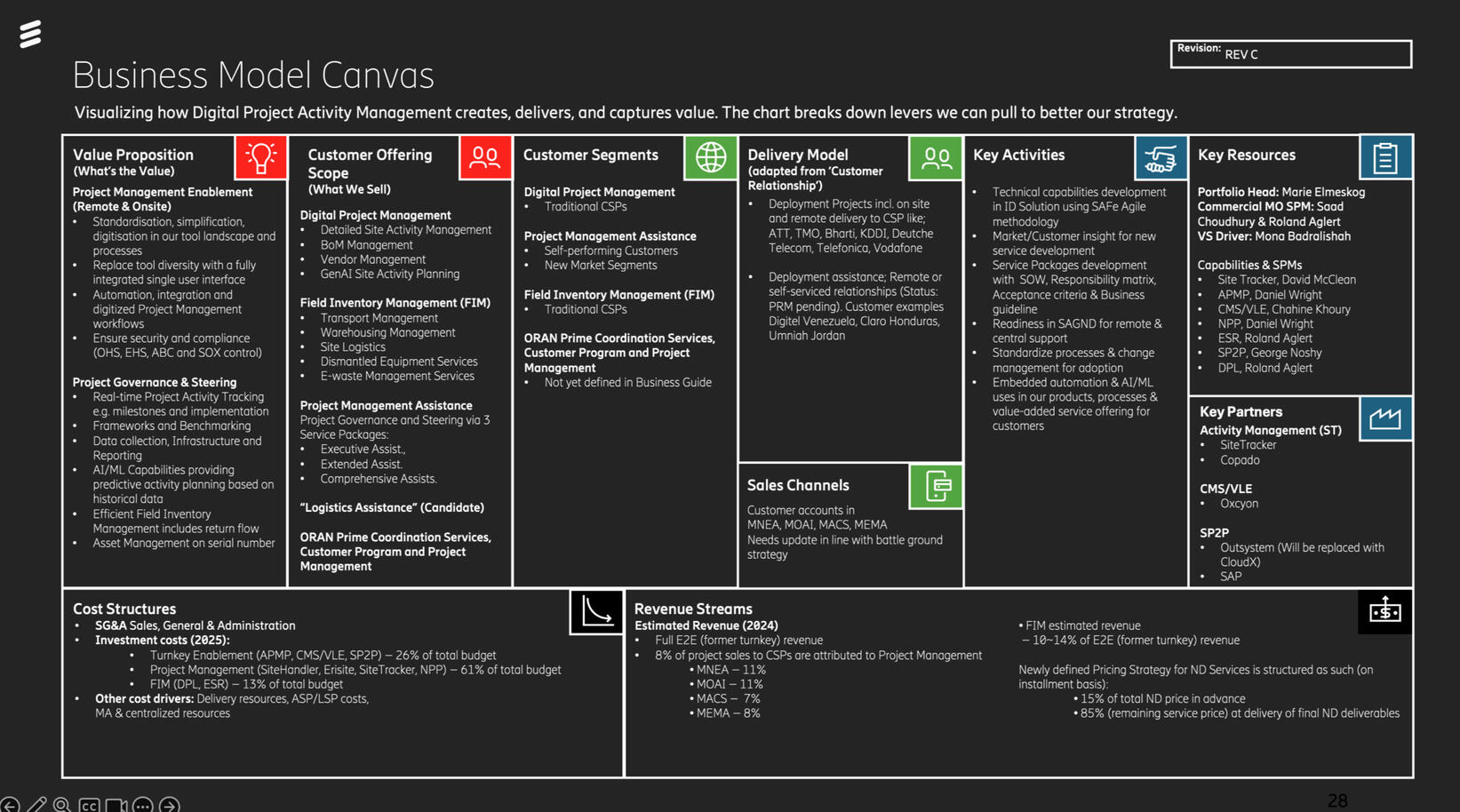
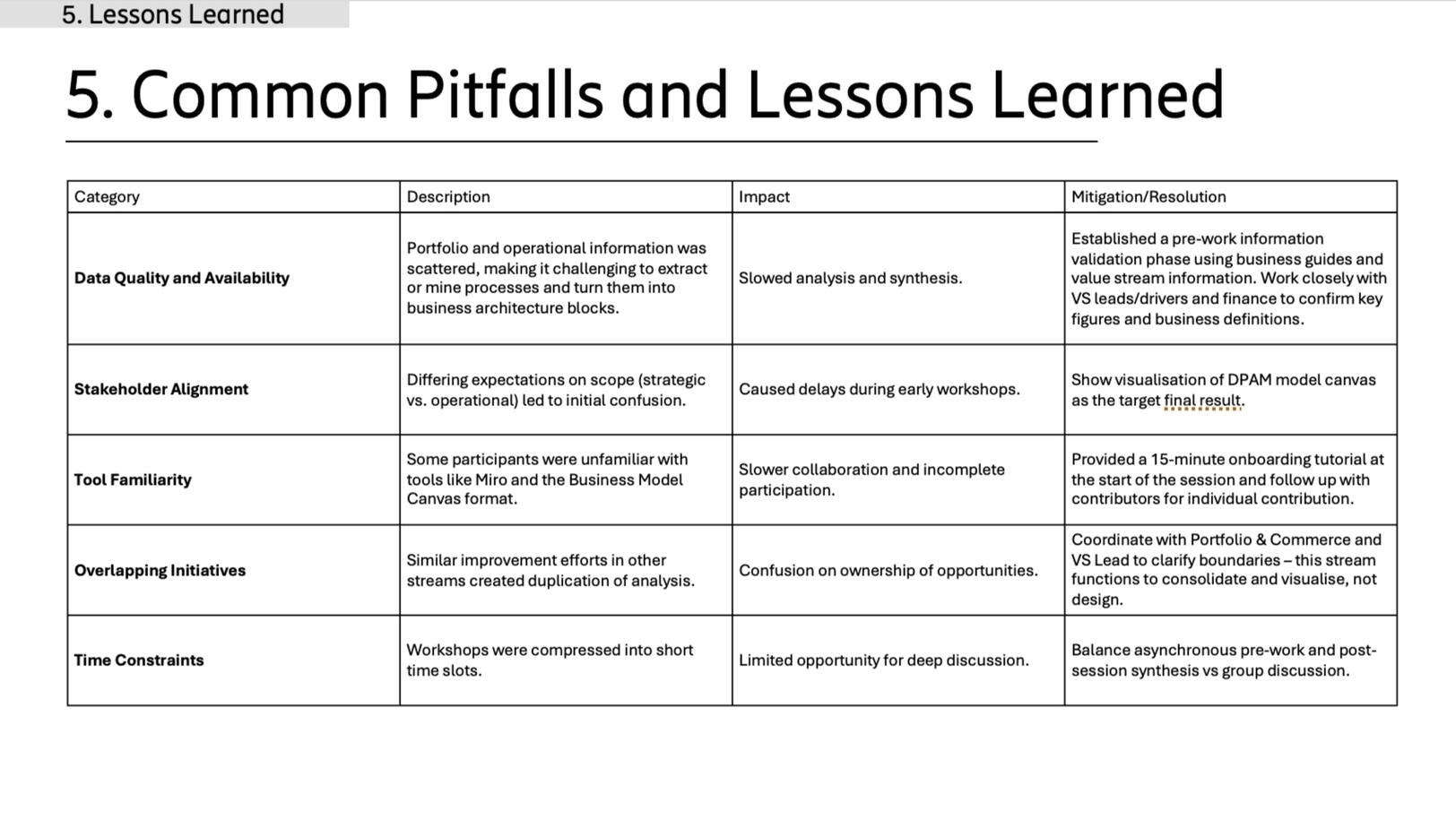
The SolutionAs Business Architect Analyst and Strategist, I was tasked with bringing coherence to a landscape where offerings, capabilities, and delivery structures were defined differently across organisations, levels, and strategic contexts - into a coherent, executive-ready architecture built on Bizbok, Strategyzer, and SAFe principles. Ericsson Networks needed a shared framing, semantics, and alignment of current and future business objectives.
Customer Segments → Pains & Gains → Value Drivers → Business Capabilities → Offering & Delivery Alignment → Investment Logic
By reframing operational detail into strategic language, I created a semantic layer that allowed executives to consume complex material without being bogged down in tooling, workflows, or market-by-market inconsistencies.Through this work, the organisation gained a cohesive understanding of how its offerings relate to operational capabilities, how customers perceive value, and how to prioritise investments in ways that support both near-term delivery and long-term strategic direction.Outcomes
• A framework for clear linkage to customer outcomes and capability gaps as a communication piece between management and operational teams.
• Unified L0–L1 business architecture converging divergent offering and delivery definitions
• Clear line of sight between long-term strategy (for 2030) and the operational capabilities that enable it
• Improved alignment between Portfolio and Operations, enabling more coherent value stream planning
• A repeatable modelling structure that supports future transformation, roadmap decisions, and capability evolution
• Meaningful visibility into how the business delivers value, enabling better communication, better prioritisation, and stronger budget negotiation for value stream leads